How to Plan a 24-Hour Painting Project in Miami
What homeowners should prepare before a painting crew arrives, what gets evaluated in advance, and why 24-hour completion applies only to qualifying projects.
By OOH! Editorial Team
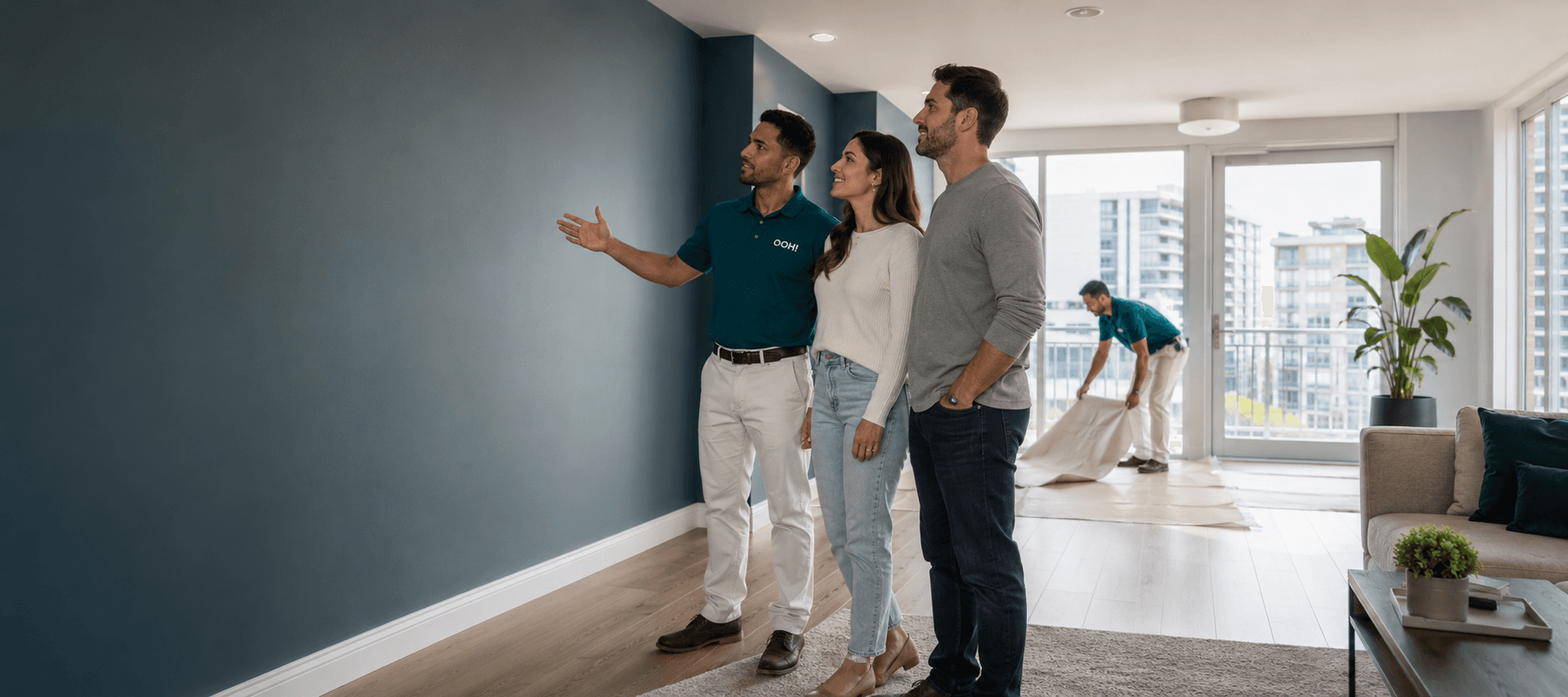
A 24-hour turnaround on an interior painting project sounds almost too good to be true — until you understand what actually makes it possible. The speed comes from preparation, not shortcuts. When a homeowner arrives home to freshly painted walls the same day the crew showed up, it's because weeks of planning, an accurate site evaluation, and a coordinated crew made every hour count. This guide walks through exactly how to prepare for that outcome, what qualifies a project for 24-hour completion, and what questions to ask before signing off on an estimate.
What makes a project qualify for 24-hour completion
Not every project is a candidate for same-day or next-day completion, and a contractor who tells you otherwise before seeing the space is making promises they may not be able to keep. The 24-hour model works when scope, conditions, and logistics align. Here's what typically puts a project in that category:
- Interior painting only — walls, ceilings, and trim within a defined area
- No significant surface damage that requires patching, skim coating, or extensive repairs
- Existing paint is in reasonably sound condition (not peeling, bubbling, or heavily stained)
- Rooms are accessible and can be cleared of furniture before the crew arrives
- The project fits within a crew's productive hours — typically a primary living area, a few bedrooms, or a defined floor
- Color change is one or two steps in tone — dramatic dark-to-light shifts may require an extra coat
Projects that require wallpaper removal, significant drywall repair, or custom decorative finishes will typically need more time. That's not a failure of the 24-hour model — it's an honest assessment of what the work requires. A good contractor will tell you upfront which category your project falls into.
What happens during the site evaluation
Before any paint touches your walls, a proper assessment sets the foundation for an accurate estimate and a realistic timeline. During a site visit, expect the estimator to:
- Measure all paintable surfaces — walls, ceilings, trim, and doors — to calculate square footage accurately
- Assess current surface condition — looking for cracks, stains, moisture damage, or existing coatings that may affect adhesion
- Evaluate ceiling height — rooms above nine feet require different equipment and more time
- Identify prep requirements — whether surfaces need sanding, priming, or spot repairs before painting
- Review access and logistics — stairwells, narrow hallways, built-ins, and other features that affect crew movement and setup time
- Discuss color complexity — how many colors, whether there's a significant tonal shift, and how many coats the transition will require
This evaluation is where your timeline gets built. An experienced contractor can look at a 1,200 square foot condo and tell you, with reasonable confidence, whether a well-coordinated crew can complete it within 24 hours. That confidence comes from the assessment — not from a generic promise.
Tip
Take photos of any existing damage — scuffs, nail holes, water stains — before your estimator arrives. This helps you align on what's included in the project scope and avoids surprises on the day of the job.
How to prepare your home before the crew arrives
Homeowner preparation is one of the most underestimated factors in project speed. A crew that spends the first hour moving furniture and clearing artwork is a crew that can't hit its production targets. Here's how to set them up for maximum efficiency:
Furniture and belongings
- Move small furniture pieces out of the rooms being painted, or push larger items to the center of the room so they can be covered
- Remove all wall art, photos, mirrors, and shelving
- Take down curtains and any window treatments — rods can often stay if they're high enough
- Clear countertops in kitchens and bathrooms of anything that shouldn't get dust or overspray on it
- Remove light switch and outlet covers if your contractor hasn't specified they'll handle it
Pets and family
Arrange for pets to stay elsewhere for the day. Paint fumes — even low-VOC formulas — are not ideal for animals, and a dog underfoot on a working job site is a safety issue for everyone. If you have children, plan for them to be out of the home during active painting hours. In Miami, that usually means having the HVAC running and windows open on the opposite side of the home from where work is happening, to move air through effectively.
Access and utilities
- Make sure the crew has clear access from parking to the front door — for condos, this means arranging elevator access or service elevator time in advance
- Have the HVAC set to maintain a consistent temperature (between 65°F and 85°F is generally ideal for paint application)
- Have your chosen paint colors confirmed and, ideally, purchased before the crew arrives — waiting on a paint run costs hours
What to expect on the day of the project
On a well-organized 24-hour project, the crew works in a defined sequence. Understanding that sequence helps you know what's happening and when it's safe to re-enter spaces.
Typically, the crew starts with protection — laying drop cloths, masking trim, windows, and fixtures. Prep work comes next: any patching, sanding, and priming happens before a single finish coat goes up. On larger projects, different crew members handle different rooms simultaneously, which is how the 24-hour window stays achievable.
First coats go up room by room, followed by an inspection pass before second coats are applied. While second coats are drying in one area, the crew may be cutting in trim or ceilings in another. At the end, all masking comes down, drop cloths are removed, and a final walkthrough happens with the homeowner to flag anything that needs touching up.
Even after the crew leaves, give freshly painted surfaces at least a few hours before touching them. Paint may be dry to the touch relatively quickly, but full hardness takes longer — especially in Miami's humidity. Your contractor should advise you on cure time for the specific products used.
Questions to ask during your estimate
A trustworthy contractor welcomes questions. These are the ones worth asking before you commit:
- Does this project qualify for 24-hour completion? If yes, ask what would change that — you want to understand the assumptions built into the timeline.
- How many people will be on the crew? A 24-hour interior project typically requires a coordinated multi-person team, not a single painter.
- What's included in prep? Specifically ask about patching, priming, and surface repairs — what's included and what would be an add-on.
- What paint products are you using? Brand, sheen, and product line matter. You should know what's going on your walls.
- What's the payment and change-order process? If additional work is discovered mid-project, how is that communicated and priced?
- What's the cleanup process? Who removes tape, moves furniture back, and disposes of paint materials?
To understand the full workflow — from estimate to final walkthrough — visit the How It Works page. If you're planning an interior painting project in the Miami–Fort Lauderdale area, the best first step is getting an estimate so a qualified crew can evaluate your specific space.
OOH! Editorial Team
Painting professionals in the Miami–Fort Lauderdale area