Best Exterior Paint for South Florida Sun, Rain and Humidity
Exterior paint in the Miami–Fort Lauderdale area faces UV intensity, salt air, and high humidity year-round. Here's what makes a coating stand up to it.
By OOH! Editorial Team
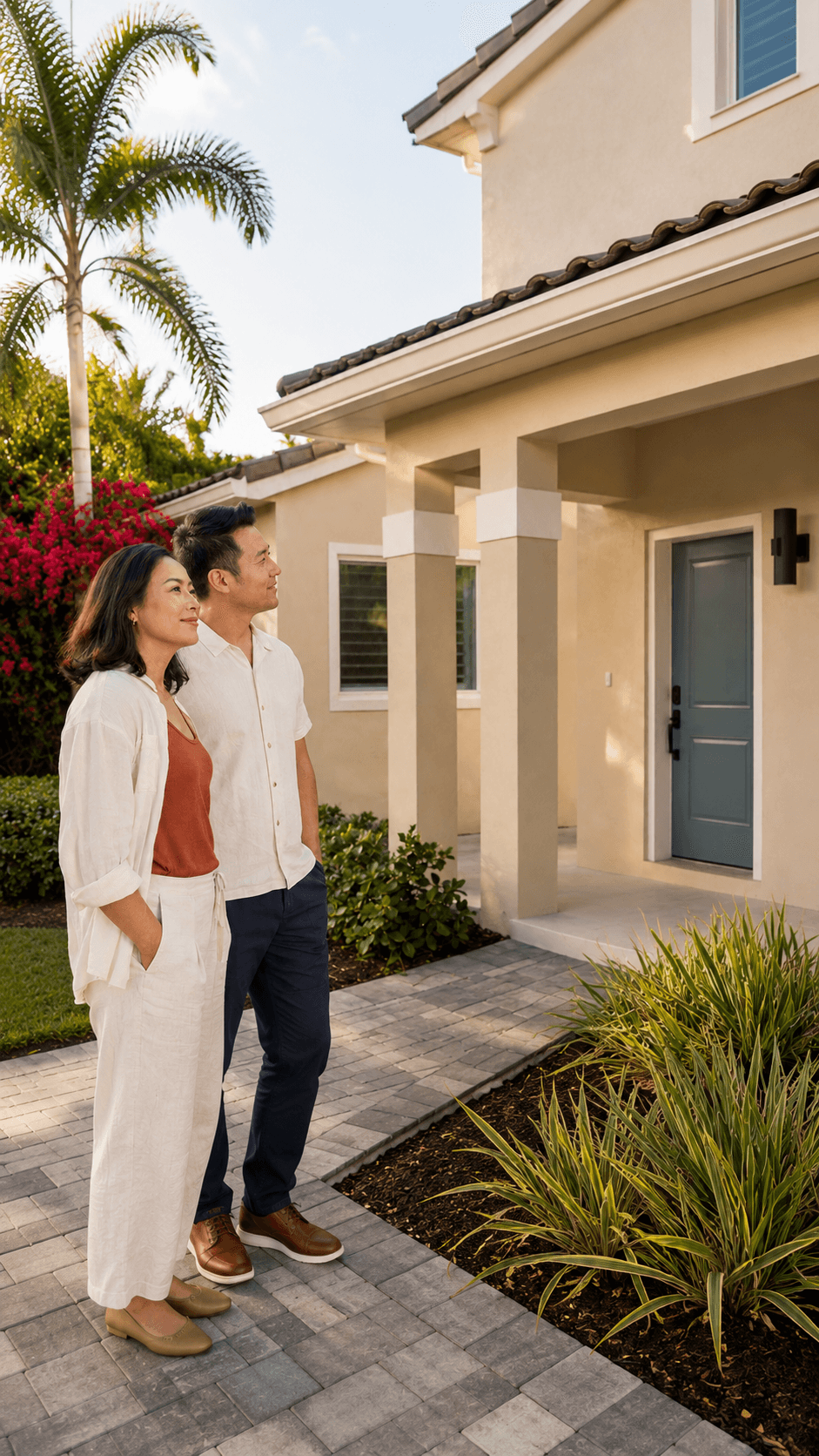
Exterior paint in the Miami–Fort Lauderdale area works harder than almost anywhere else in the country. Intense UV radiation breaks down pigments and binders. High humidity promotes mold and mildew growth. Salt air from the coast accelerates oxidation. Heavy rain creates hydrostatic pressure on porous surfaces. A coating that performs well in a moderate climate may fail within two years in South Florida — while the right product, applied correctly, can hold up for a decade or more. This guide explains what to look for when choosing exterior paint for a Miami-area home and why product selection matters as much as prep and application technique.
What South Florida's climate does to exterior paint
The Miami area sits near the 26th parallel with minimal cloud cover for much of the year. The UV index regularly reaches 10–11 in summer — the same intensity you'd find in the Caribbean. Prolonged UV exposure degrades the organic binders in conventional paint films, causing chalking (a powdery surface residue), color fading, and brittleness. Surfaces facing south and west receive the most direct exposure.
Beyond UV, the humidity cycle creates a different problem. Surfaces absorb moisture, expand, and contract as temperatures shift between day and night. Over time, this movement causes cracking and delamination in coatings that lack flexibility. In coastal neighborhoods — Coconut Grove, Miami Beach, Hollywood, Dania Beach — salt in the air accelerates oxidation of metal substrates and can affect the adhesion of coatings on concrete block if moisture intrusion isn't managed.
South Florida's rainy season (roughly May through October) means exterior surfaces regularly cycle between wet and dry. Mold and mildew spores are always present in the air. A coating without active mildewcide additives will typically show biological growth within one to three years, even on a properly prepared surface.
Key properties to look for
When evaluating exterior paint products for a South Florida application, these properties matter most:
- UV-stabilized resins — acrylic resins with UV-absorbing additives resist chalking and retain color longer than standard formulas
- Mildewcide additives — not all exterior paints include these; look for products that specifically list mold and mildew resistance as a feature
- Moisture resistance / breathability — a coating should resist bulk water intrusion while still allowing vapor from inside the wall to escape; a paint that traps moisture accelerates paint failure and can damage the substrate
- Flexibility — the paint film needs to flex with thermal expansion and contraction without cracking; elastomeric coatings take this furthest
- Adhesion to masonry — most Miami-area homes are concrete block or stucco; the binder formulation must bond well to these alkaline surfaces
- Salt air tolerance — relevant within a few miles of the coast
What "100% acrylic" means
"100% acrylic" indicates the binder is pure acrylic resin, not a vinyl-acrylic blend. Pure acrylic binders are more durable, more flexible, and more UV-resistant than lower-cost blended formulas. For South Florida exteriors, this distinction matters.
Acrylic latex vs. elastomeric coatings
Most professional exterior repaints on South Florida homes use premium 100% acrylic latex paint. It performs well on most surfaces, applies readily, and is relatively forgiving on preparation. For most repaints where the existing surface is in reasonable condition, it's the appropriate choice.
Elastomeric coatings are a step up in both thickness and flexibility. A typical elastomeric coating applies at two to four times the film build of standard paint and can bridge hairline cracks — including the small surface cracks (crazing) that commonly develop in stucco over time. These products are particularly useful on older stucco homes where the surface has developed minor cracking and where waterproofing is the primary goal.
Elastomeric coatings are not appropriate for every situation. On surfaces that need to breathe (like newly applied stucco still curing), they can trap moisture and cause adhesion failure. They also cost more per gallon and require specific application techniques. Whether an elastomeric coating is the right choice depends on the surface condition, age, and current moisture situation — which is why a proper site evaluation matters before choosing a product.
Coating by surface type
Stucco (most common in Miami)
Most homes in Miami-Dade and Broward are concrete block with a stucco exterior finish. Stucco is alkaline, porous, and highly susceptible to mold and moisture. It typically needs a masonry primer or alkali-resistant primer before topcoat, particularly on newly repaired or refinished areas. A premium 100% acrylic topcoat or elastomeric coating is appropriate depending on condition.
Wood siding and trim
Wood is less common on South Florida exteriors than stucco, but wood soffits, fascia boards, and decorative trim are found on many homes. Wood requires a water-repellent primer and an acrylic topcoat with good flexibility. Any cracked or weathered caulk around wood trim needs to be replaced before painting — paint over failed caulk will fail in the same places.
Concrete block (bare or previously painted)
Bare concrete block is very porous and may require a block filler primer to level the texture and reduce topcoat consumption. Previously painted block that is in sound condition can typically be painted directly after cleaning and any necessary repairs.
Color choices and heat absorption
Darker exterior colors absorb more solar radiation. On a concrete block home with minimal insulation between the exterior wall and the living space, a dark exterior color can meaningfully increase interior temperatures and air conditioning load. Light-colored exteriors — whites, creams, pale yellows, soft grays — are the dominant choice in South Florida for practical as well as aesthetic reasons.
This doesn't mean dark colors are off the table. If your home is well-insulated or if you're focused on curb appeal for a short-term rental or sale, darker accents on trim, shutters, or doors can be highly effective. The key is understanding the heat-load tradeoff before committing.
Some manufacturers offer "cool roof" or "cool exterior" color lines formulated with heat-reflective pigments — useful if you want darker shades without the full heat penalty.
Why surface prep determines performance
The best paint product available will fail prematurely if applied over a dirty, mold-affected, or poorly prepared surface. Exterior prep for a South Florida home typically involves:
- Pressure washing — removes mold, mildew, chalked paint, dirt, and salt deposits. Not optional.
- Mildewcide treatment — active biological growth needs to be killed before painting, not just washed over
- Caulk replacement — failed caulk around windows, doors, and transitions is the primary point of water entry
- Crack repair — stucco cracks should be filled with a compatible patching compound and allowed to cure before painting
- Priming — new repairs, bare masonry, and areas where the previous coating is failing all need primer
Skipping or rushing any of these steps compresses the useful life of the paint job. A lower-quality product applied over thoroughly prepared surfaces will generally outperform a premium product applied over a dirty or compromised surface.
For more on the full project process, including what happens before the first coat goes up, visit the How It Works page. If you're planning an exterior painting project in the Miami–Fort Lauderdale area, an on-site evaluation is the right first step.
Frequently asked questions
Do I need a special primer for stucco?
For new or freshly repaired stucco, a masonry primer that neutralizes alkalinity is typically recommended. On previously painted stucco that's in good condition, a full reprime may not be necessary — though spot priming over repairs is always needed.
How long does exterior paint last in Miami?
With proper prep and a quality product, five to eight years is a reasonable expectation for stucco. Surfaces closer to the coast or in direct western sun may need attention sooner. See How Often Should You Repaint a Miami Exterior for a more detailed breakdown.
Can you paint the exterior in rainy season?
Yes, with scheduling around the daily afternoon storms that characterize Miami's rainy season. Most professional crews work early mornings and complete application before midday thunderstorms arrive. Paint needs a dry surface and typically a few hours of dry conditions after application to cure properly.
OOH! Editorial Team
Painting professionals in the Miami–Fort Lauderdale area